
Tanel Raised $2.45M, Then Sold to Its Own Seed Investor
TechCurrent Staff•10:10 UTC•8 min read
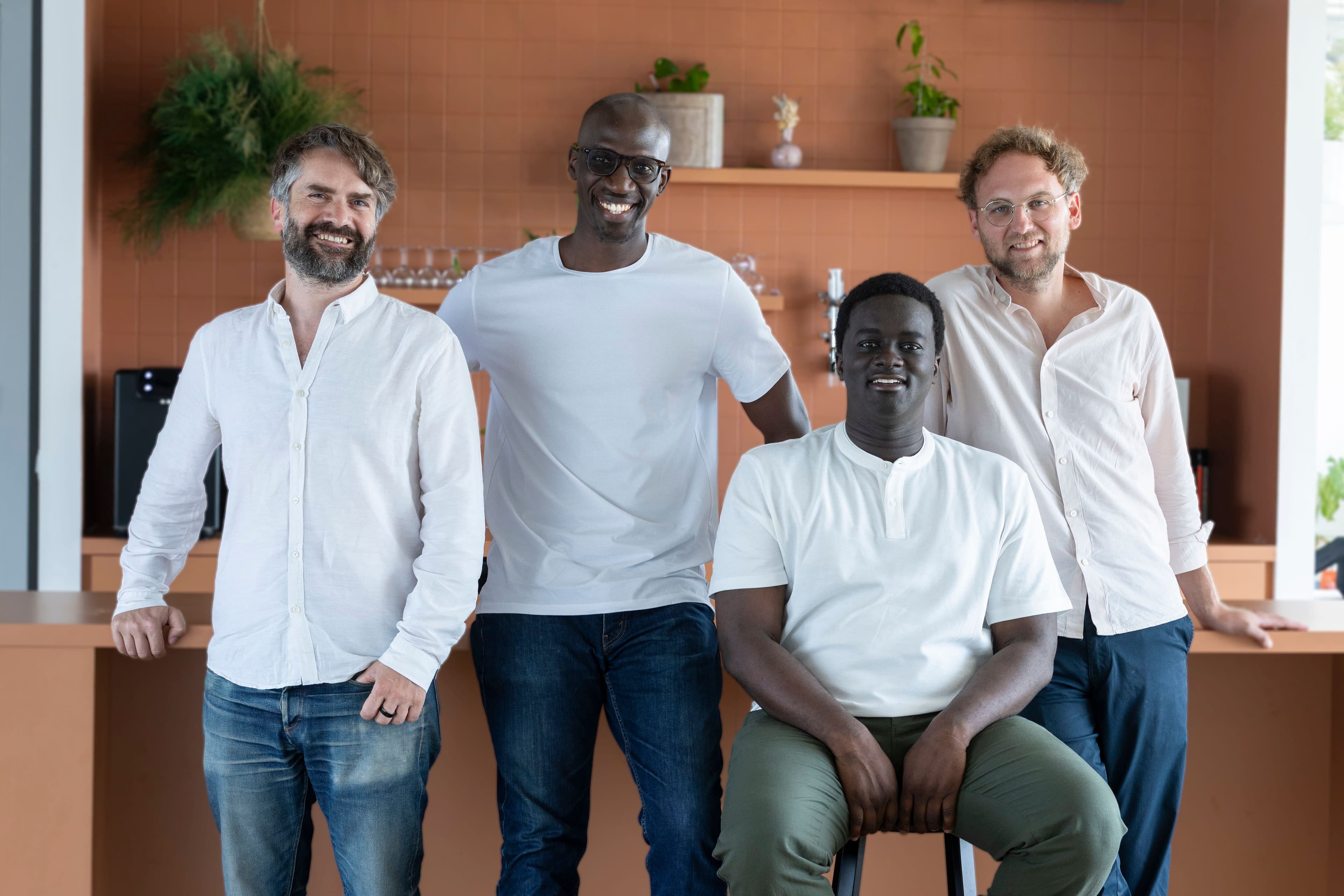
Tanel raised $2.45 million in its lifetime: a $350,000 pre-seed, then a $2.1 million seed in 2024, according to TechCabal. The Dakar-based startup used that money to become a licensed health insurer in Senegal and Côte d'Ivoire and turned profitable in 2025. On September 2, French health insurer Alan, fresh off a Series G at a 5.5 billion euro valuation, announced it had bought the company outright.
According to Alan's official announcement, the deal is Alan's first entry into Africa. The transaction closed in June, per TechCabal, and terms were not disclosed. Alan also led that 2024 seed round, so the buyer had spent two years inside the company before it made an offer.
Exits are rare in African tech, and rarest in its Francophone markets. In the same news cycle that saw Terra Industries close Africa's largest-ever seed round at $52 million, Tanel exited on lifetime funding of less than a twentieth of that, without ever running the blitzscaling arc that dominates African startup narratives.
"African tech still sees too few exits, particularly in Francophone Africa. Alan's acquisition validates their vision and demonstrates the potential for ambitious, locally built companies to create lasting value."
That assessment comes from Dotun Olowoporoku, managing partner at Ventures Platform, one of Tanel's seed investors, quoted in coverage of the deal. The scarcity he describes is measurable. The same week this deal was reported, the continent's biggest exit headline was the other kind, Uber walking away from Nigeria and Uganda in a single day. And research by Ventures Platform and Stears tracking 181 verified exits, cited by TechCabal, found that international acquirers made up 56% of disclosed African startup exits in 2020 and just 33% by 2025, which makes a European acquirer paying for a Senegalese company notable on its own.
70,000 covered lives, price undisclosed
According to Alan's announcement, Tanel covers roughly 70,000 lives across more than 400 companies, with a network of over 1,200 pharmacies and healthcare providers. TechCabal adds that Tanel has around 30,000 paying customers, with about 90% of revenue from Senegal and 10% from Côte d'Ivoire.
The price and the cash-versus-stock split are undisclosed. Tanel CEO Mouhamed Ndoye told TechCabal the outcome was "meaningful" for investors and declined to go further. It was a full exit for seed investors Ventures Platform, AAIC Investment, and angels including Dr Mussaad M. Al-Razouki, Alyune-Blondin Diop, and Charles "Chuck" Slaughter. Co-founders Ndoye and Makhtar Diop stay on as general managers running Tanel's operations and Alan's Africa development, reporting to Alan CEO Jean-Charles Samuelian-Werve, and the Tanel team is being retained.
Alan is not a small buyer. Per its Q2 2026 shareholder letter, the company reached roughly 840 million euros in ARR, growing 55% year over year, with about 1.14 million members across France, Spain, Belgium, and Canada. In June 2026 it closed a 480 million euro Series G led by Prosus at a 5.5 billion euro valuation, according to Prosus's release. Alan said it would spend part of the round on acquisitions, AI, and healthcare services, per TechCabal. The Tanel deal closed the same month.
Full-stack on $2.45 million
Most health insurance startups begin as brokers or third-party administrators, selling and servicing someone else's policies for a commission. Becoming a licensed carrier that holds regulatory capital, underwrites risk, and books the premiums takes years and serious money. Tanel became a carrier anyway, on a budget that would barely cover a broker's marketing line. According to TechCabal, the company carries its own risk rather than administering policies on top of someone else's balance sheet. Founded in 2021 by Ndoye and Diop to replace largely paper-based employer health coverage administration, it built its own provider network of 1,200+ pharmacies and clinics along the way.
"Building the company felt like trying to build cars where the roads did not yet exist, so we began creating the infrastructure ourselves."
That is how the founders described it in Alan's announcement. Owning the license means owning the economics and the customer relationships. For Alan, buying a licensed, profitable local carrier is a shortcut past the slowest parts of entering an insurance market: the license itself, the contracted provider network, and working claims infrastructure.
The deal also removes a cap on Tanel's growth. Solvency rules tie the premiums a small carrier can write to the capital it holds. TechCabal reports that Tanel now gains access to Alan's reinsurance partnerships with global reinsurers, which lets it cede risk and free up underwriting capacity its small capital base could never have supported alone.
Alan itself took the full-stack route in Europe, obtaining its own insurance license rather than brokering. It acquired a miniature of itself.
Two years of monthly calls before the offer
Alan invested in Tanel's $2.1 million seed round in 2024 and says it has worked closely with the founders since. Ndoye told TechCabal the two sides kept up monthly calls and investor updates for about two years before Alan made the first approach, asking whether the founders would consider a sale. Tanel had been planning a Series A raise this year and, once Alan reached out, ran a dual process, weighing the fundraise against the sale.
"We realised they are very similar in culture and similar in mission, so we said, why not go down this route?" Ndoye told TechCabal. Regulatory clearances, he said, "went through very quickly."
By the time an offer existed, the information asymmetry that usually makes cross-border M&A slow had mostly evaporated. The founders were negotiating with a buyer who already understood the business, and the parallel Series A track kept a live alternative on the table. The small raise helped too: at $2.45 million of lifetime funding, almost any "meaningful" price clears every investor's bar. The same outcome after a $40 million raise would read as a disappointment.
The dynamic cuts both ways, though. A strategic investor on the cap table can chill competing bidders and cap price tension, because rivals assume the insider has an edge and the insider knows exactly what the company is worth. "Meaningful for investors" is all anyone outside the deal knows about the price. Founders taking strategic seed money may be choosing their eventual acquirer, and their negotiating ceiling, years in advance.
Fourteen countries, one insurance code
Tanel was also born into a regulatory geography that has had far less coverage than the deal itself. Three overlapping Francophone institutions shaped both the company's expansion and the acquisition.
| Layer | What it harmonizes | What it means in practice |
|---|---|---|
| CIMA | Insurance regulation | One insurance code across the 14-country zone, one regional supervisory commission (CRCA) |
| WAEMU | Currency | Senegal and Côte d'Ivoire share the CFA franc (XOF), pegged to the euro |
| OHADA | Business law | One company-law regime and one supreme commercial court (CCJA, Abidjan) across 17 member states |
CIMA, the Conférence Interafricaine des Marchés d'Assurances, dates to a treaty signed in Yaoundé in 1992 and applies a single insurance code across a zone commonly counted at 14 member states, including both of Tanel's markets, with prudential supervision through the regional CRCA commission.
CIMA is not EU-style passporting, though. According to AXA XL's analysis of the CIMA framework, the code does not enable an insurer to cover risks in one member state from another. Every new country still requires local establishment and a local license, and national insurance directorates retain their own frictions. The zone offers one rulebook and one supervisor, which lowers the marginal cost of each new market rather than eliminating it.
For Tanel that meant expanding from Senegal into Côte d'Ivoire required a new local presence but zero new rulebooks. WAEMU's shared currency removed FX risk between its two markets, and the euro peg reduced it against Alan's home base. And OHADA's Uniform Acts, one harmonized body of business law across its 17 member states, meant the M&A mechanics themselves, share transfers and corporate approvals, ran under a company-law regime familiar to any lawyer in the zone.
A startup that earns an insurance license in one CIMA state has effectively pre-paid the regulatory learning curve for 13 more markets, even though each still requires establishing locally. Anglophone Africa, with its patchwork of national insurance regimes, has no equivalent.
A million covered lives by 2030
Alan pegs the Senegal and Côte d'Ivoire health insurance market at roughly 600 million euros, growing about 10% annually. That is Alan's own estimate, from its announcement, and worth reading as the company's investment thesis rather than an independent market study. The stated goal is more than one million covered lives across Africa by 2030, consolidating Senegal and Côte d'Ivoire first before looking to Anglophone West and East Africa. (Some outlets name Nigeria and Kenya as next; Alan has not, so treat that as unconfirmed.) Planned integration covers telehealth, preventive care, and a rebuilt digital patient journey.
"Healthcare systems are evolving all over the world, but the expectations remain the same: easier access to care and support before a health problem becomes more serious," Samuelian-Werve said in the announcement.
What made Tanel worth buying was not a growth curve. It was the license, the 1,200-provider network, and the claims infrastructure that even a 5.5 billion euro acquirer could not quickly replicate. Much about the deal stays undisclosed: the price, the structure, Tanel's revenue and loss ratios, and the multiple investors earned. What is public is that Alan closed a 480 million euro round in June with acquisitions on the shopping list, and that the two founders now running its Africa development were, until this summer, running a startup it had seeded. Invest early, buy later has worked once. Alan has the capital to try it again.
“African tech still sees too few exits, particularly in Francophone Africa. Alan's acquisition validates their vision and demonstrates the potential for ambitious, locally built companies to create lasting value.”
Reporting by TechCurrent Staff · TechCurrent