
Africa's Record $52M Seed Went to a Defence Startup in Abuja
TechCurrent Staff•Sep 3•7 min read
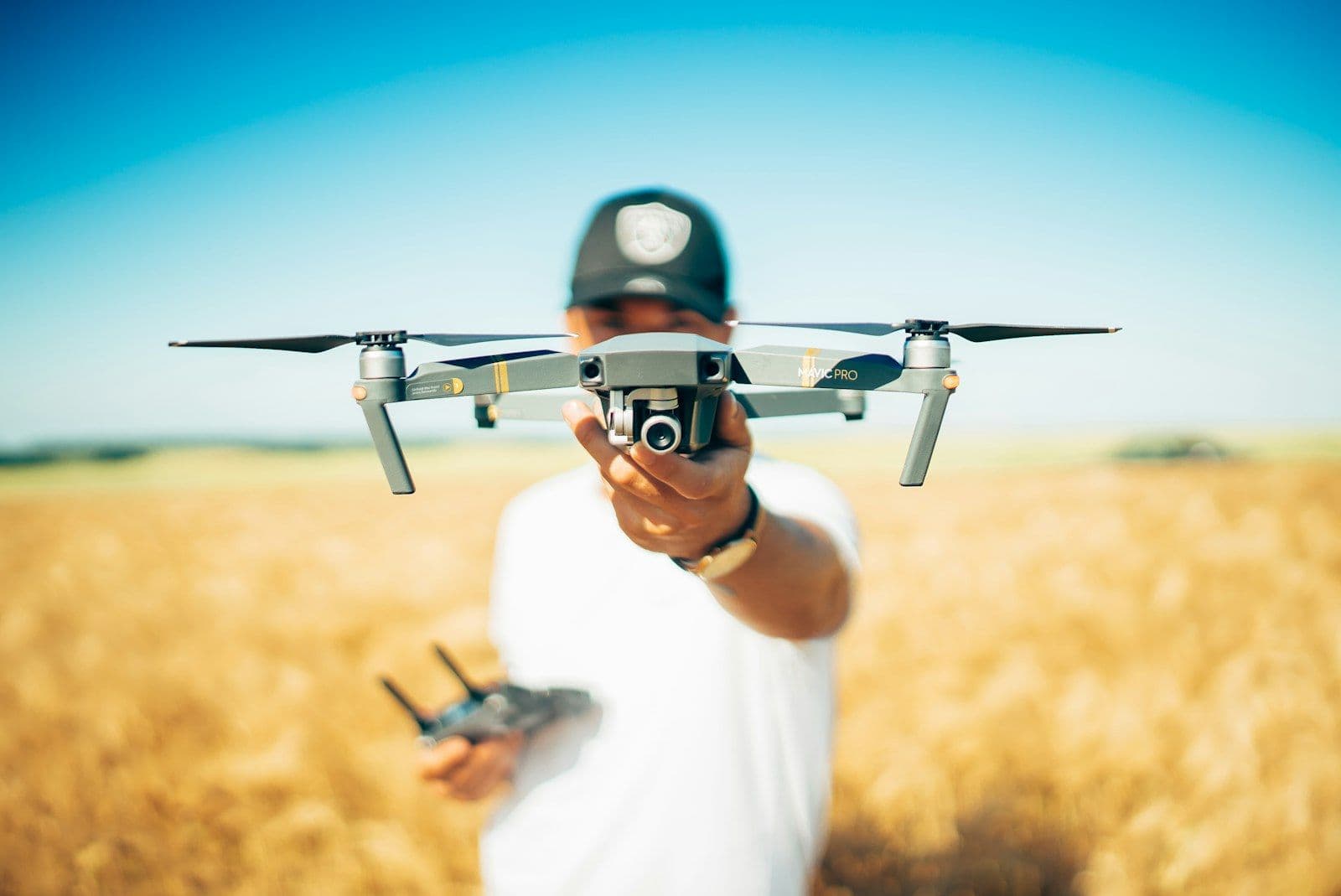
Terra Industries closed its seed round at $52 million on August 17. TechCabal, TechCrunch and the company's own announcement all put the total at $52 million. TechCabal and other African trade outlets called it the largest seed an African startup has ever raised, a claim the company itself does not make and that no funding tracker we checked publishes a ranking for. The company builds defence hardware in Abuja's Idu Industrial District. Its CEO, Nathan Nwachuku, is 22; his co-founder and CTO, Maxwell Maduka, is 24. It is barely two years into production.
Most of the coverage stopped at the record. Less has been written about what the money is for, or about why 8VC, Lux Capital and Valor Equity Partners, the firms that bankrolled America's Anduril generation of defence startups, decided a Nigerian seed deserved Series B-scale capital.
Three tranches in seven months
Coverage of the August close often leads with the $18 million tranche rather than the $52 million total. Nairametrics, Disrupt Africa and TechCrunch all report the $18 million as the final addition that brings the seed to $52 million, and Terra's own announcement words it the same way. The two figures describe the same round.
The $52 million did not arrive at once:
| Tranche | Amount | Announced | Led by | Notable participants |
|---|---|---|---|---|
| 1 | $11.75M | January 2026 | 8VC | Valor Equity Partners, Lux Capital, SV Angel; angel Alex Moore (Palantir board) |
| 2 | $22M | February 2026 | Lux Capital | Belief Capital, Resilience17 Capital (fund of Flutterwave CEO Olugbenga Agboola); angel Jared Leto |
| 3 | $18M | August 2026 | (final close) | New: Norleo Space Investments, angel Grant Gordon; returning: 8VC, SV Angel, Silent Ventures, Nova Global, Belief Capital |
According to TechCrunch's February reporting, the $22 million extension closed in under two weeks, with Nwachuku attributing investor urgency to "faster-than-expected traction" on deals and partnerships.
Neither Terra nor any of its investors has disclosed a valuation, and no tranche came with a published number, so any "priced like a Series B" framing rests on the round's size and structure, not on a known price. What can be said is that African seed rounds typically land under $5 million, and that three preemptive tranches in seven months, including a two-week extension close, is how hot US deep-tech deals behave.
African seed rounds usually top out under $5 million. Terra raised ten times that, in three preemptive tranches, from the same investors who funded Anduril's generation of defence startups.
The round also landed in the same few weeks that Uber walked away from Nigeria and Uganda entirely (we took apart the unit economics of those exits). Consumer platforms are pulling out of the very markets that defence-tech investors have just decided to fund at record scale.
What ArtemisOS claims to be
The company began as Terrahaptix, reportedly founded in 2023, before relaunching as Terra Industries with an explicit defence positioning. Company materials date the current entity to 2024, and Semafor reports production began in April 2024. So the startup that just raised Africa's largest seed has already rebranded once, and its founding year depends on which entity you count from.
At the centre of the pitch is ArtemisOS, which the company describes as "an open operating system that powers real-time threat detection and autonomy across all systems," designed to be "sensor, network, and system agnostic." Per the company's own materials, it claims to provide:
- A unified command layer for clusters and swarms of unmanned systems - Autonomous mission planning, including "real-time decision-making, dynamic path planning, and intelligent obstacle avoidance" - Geospatial intelligence built from high-volume drone and sensor telemetry - AI-based detection, classification and tracking of targets
Every item on that list is vendor-asserted. TechCurrent found no published information on ArtemisOS's architecture, its edge-versus-cloud processing split, the models it runs, its autonomy level, or any benchmark. No third party has independently evaluated the software, and no customer has spoken on the record about ArtemisOS specifically. That does not mean the claims are false; it means readers should treat the capability language as marketing until independent evaluation exists.
The structural comparison investors are plainly making is to Anduril, the US defence company whose Lattice platform plays the same role: one software brain commanding a family of in-house hardware. That comparison is TechCurrent's, not the company's, but it is not a stretch. 8VC, Lux and Valor are the firms that backed Anduril-generation defence startups, and Sacra's analyst profile lists Anduril first among Terra's comparables.
The hardware ArtemisOS commands
Terra's product pages list five systems. All specs below are vendor-published:
| System | Type | Headline vendor specs |
|---|---|---|
| Archer | Long-range VTOL drone | Up to 1,000 km range, 4 h endurance, 20 kg payload, 60 kg vehicle weight |
| Iroko | Modular quadcopter | Up to 50 km range, ~50 min endurance, 1.5 kg payload |
| Duma | Tracked ground vehicle (UGV) | 600 kg payload, 24 h endurance, 10 km control range |
| Kallon | Solar-powered AI sentry tower | Threat tracking to 3 km; 5 km observation range |
| Kama | Interceptor drone | Reported ~300 km/h counter-drone interceptor (thinner sourcing) |
The specs need reading carefully. The Kallon tower's product page lists a 3 km detection-and-tracking range alongside a separate 5 km observation range, and press coverage frequently blurs the two into a single figure. The Archer is described on the company site as a surveillance platform for mines and pipelines, while some coverage calls it a "surveillance and strike platform." Whether Terra sells strike capability is unclear from public sources, and TechCurrent could not resolve it.
The business model, as Sacra's analysts describe it, is hardware sold upfront with recurring annual ArtemisOS licensing for data processing and storage: hardware wins the site, software expands the account.
The hardest number is a $1.2 million contract
There is a real, independently reported business under the projections. In June 2025, Semafor reported that Terra won a $1.2 million contract, covering 12 drones and more than 35 surveillance towers, to protect two Nigerian hydropower plants, beating an Israeli consortium for the deal. By then, per the same report, the company had booked over $1 million in commercial revenue since April 2024 and was operating in Nigeria, Ghana and Kenya across oil, mining, agriculture and power. "Right now, our fastest growing market is the power sector," Nwachuku told Semafor.
Beyond that, the numbers get softer. The company told TechCrunch in February it had passed $2.5 million in commercial revenue and was protecting assets valued at roughly $11 billion across several African countries. Both figures are company-asserted. The $11 billion number has been repeated unchanged since January 2026 despite claimed growth, which suggests a static talking point rather than a live metric. The August claim that Terra is "on track to book $100 million in contracts" is a company projection.
| Figure | Value | Status |
|---|---|---|
| Seed total | $52M | Confirmed |
| Hydropower contract | $1.2M, 12 drones, 35+ towers | Independently reported (Semafor) |
| Revenue (Feb 2026) | >$2.5M | Company-asserted |
| Assets protected | ~$11B | Company-asserted, unverified |
| Contract pipeline | "$100M on track" | Company projection |
| Valuation | Undisclosed | Unknown |
The cap table runs through Palantir
8VC is Joe Lonsdale's firm; Lonsdale co-founded Palantir. Alex Moore, a Palantir board member, invested personally in the first tranche. Todd Stiefler, a former Palantir and WHOOP executive, joined as Director of Commercial in August, and Ben MacWilliams arrived from SpaceX as VP of Strategy, per company announcements and trade coverage.
The thesis behind those moves is on the record. Brandon Reeves, the Lux Capital partner whose firm led the $22 million tranche, said in a statement republished by Africa Private Equity News: "We believe in a future where local defence technology prevails, because security is the prerequisite for all economic growth," describing Terra as building "the African defence prime."
The demand behind that thesis is grim and specific: sustained attacks on power, mining and pipeline infrastructure across West Africa and the Sahel, and operators who need protection systems built for those environments. Nwachuku frames it as sovereignty. "The only way Africa can have lasting peace is by uniting to build sovereign defence, not by relying on foreign security architecture," he told Techpoint in April.
The Nigerian state has a stake in this too. In February, Terra signed an MoU with the Defence Industries Corporation of Nigeria (DICON) to form a jointly owned venture company localising production of drones, cybersecurity systems and robotics, executed under the DICON Act 2023's public-private partnership framework, according to TechCabal. Nigeria has spent 2026 building formal on-ramps for strategic technology, from the CBN's stablecoin sandbox to defence production, and for a defence startup a structural tie to the national procurement authority is arguably worth more than any single contract.
What the $52 million builds
Per TechCrunch and the company's announcement, the money goes to manufacturing capacity, Global South deployments, engineering and business-development hiring, and a first international office in London, with San Francisco and Washington DC planned.
Manufacturing is the boldest piece. Terra already runs Pax-1, a 15,000 sq ft factory in Abuja with a claimed capacity of up to 10,000 units a year. Pax-2, a 34,000 sq ft facility in Accra billed as "Africa's largest drone factory," was announced in April with roughly 120 engineering jobs and a projected 50,000 units of annual capacity by 2028.
April coverage said Pax-2 would be fully operational by the end of June 2026. The company's August announcement now says it opens in Q4 2026. That slip of roughly two quarters went unremarked in the coverage we reviewed, and for a company selling execution speed it is worth tracking.
The independent record supports a smaller company than the one Silicon Valley just funded: real revenue, one well-documented contract win, a useful government partnership, and an operating system whose capabilities remain entirely vendor-asserted. The version investors paid for, the African Anduril with a swarm-commanding software layer and a 50,000-unit factory pipeline, so far exists mainly in company materials. The gap starts to close, or widen, in Q4, when the Accra factory is due to open and that $100 million contract projection meets signed deals.
“African seed rounds usually top out under $5 million. Terra raised ten times that, in three preemptive tranches, from the same investors who funded Anduril's generation of defence startups.”
Reporting by TechCurrent Staff · TechCurrent